Future-Proofing the Health of Nations
Adoption matters more than invention, partnerships matter more than any single organisation, and a healthy environment is part of public health. Lessons from a panel at Dubai's Museum of the Future.
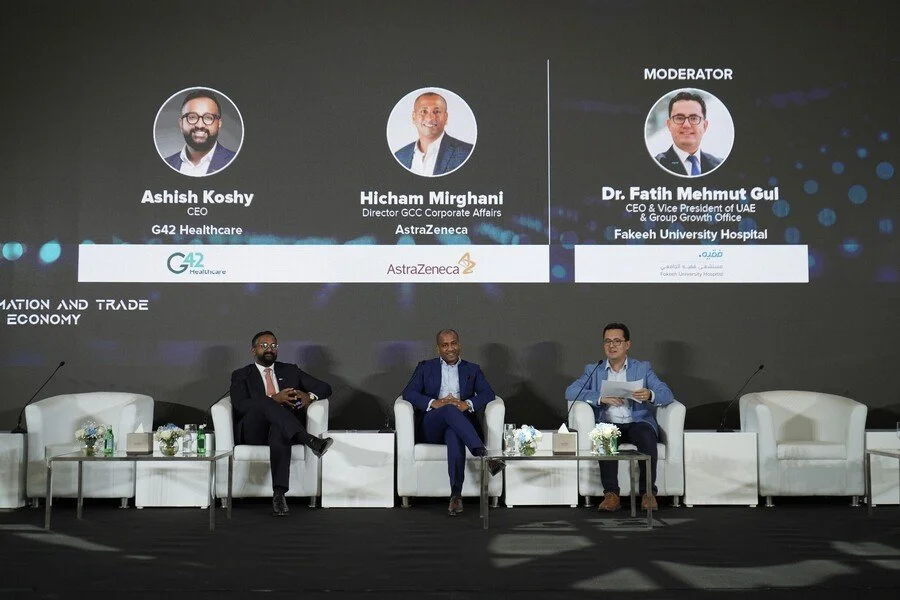
In May 2023 I moderated a panel at the Museum of the Future in Dubai on "Future-Proofing the Health of Nations", organised by the World Sustainability Business Forum. Alongside me were Ashish Ipe Koshy, then chief executive of G42 Healthcare, and Hicham Mirghani, corporate affairs director for the GCC at AstraZeneca. A technology company, a pharmaceutical company and a hospital operator do not always see the future the same way, which is exactly why the conversation was useful.
1. Innovation has to reach the community
G42 Healthcare described an integrated approach: data management, telemedicine and genomics brought together to improve population health. The point that stayed with me was that innovation only matters when it changes outcomes for a population, not when it is demonstrated in a laboratory.
2. Adoption decides whether technology works
The pandemic produced an explosion of digital health tools. Many have since disappeared. The ones that survived were easy to use and widely adopted. Robotic surgery is a good example: early scepticism from patients and surgeons gave way as results and confidence grew.
In our own hospital, we focused on adoption from the start. Patients used the mobile app, patient portal, online booking and messaging services because they were designed around what patients already did. A hospital's digital strategy should be judged by how many patients and staff actually use it.
3. Collaboration is how systems improve
The panel discussed the partnership between G42 and AstraZeneca to develop and manufacture medicines in Abu Dhabi. Global expertise combined with local knowledge creates value neither could produce alone. The same is true for hospitals working with international academic partners: the partnership works when both sides bring something the other lacks.
4. A healthy environment is part of health
Healthcare is responsible for a significant share of global carbon emissions, often estimated at around five per cent. AstraZeneca described its commitment to reducing the sector's footprint. For hospital leaders, this is no longer a side issue. The buildings we design and operate today will be running for decades, in a region that already faces extreme heat.
5. Research is what makes the future possible
Both panellists described research programmes, from pharmacogenomics to understanding the region's specific health needs. Health systems that do not invest in research end up importing solutions designed for other populations.
Questions for boards and leadership teams
- How many patients and staff actually use the digital tools we have paid for?
- Which partnerships would give us capabilities we cannot build alone?
- Is environmental impact part of how we design and operate our facilities?
The health of a nation is not future-proofed by technology alone, but by technology people use, partnerships that work and environments that keep them well.
Related: Net-Zero Hospitals in the Gulf.
Dr Fatih Mehmet Gul is a physician and healthcare executive who has built, commissioned and led hospitals across the Gulf and Türkiye. He is an Honorary Professor at UCL Global Business School for Health, author of Connected Care, and host of The Chief Healthcare Officer podcast.
More insights →