“How Are You?” Caring for the People Who Care
Burnout among healthcare workers is a patient-safety risk, not only a personal one. It is managed best by leaders who ask a simple question and act on the answer.
For many years I have started almost every conversation with a colleague, in person or on the phone, with the same question: "How are you?" It sounds trivial. In practice, it opens the door to concerns that would otherwise stay unspoken until they became problems. It is the most useful habit I have as a leader.
Why this matters
Healthcare has always been demanding work. The pandemic made burnout visible, but it did not create it. Staff shortages, rising expectations, regulatory pressure and constant change wear people down. The cost shows up in errors, turnover, sick leave and patient experience.
The Gulf is not exempt. Research by the McKinsey Health Institute across four GCC countries found that around two-thirds of employees reported symptoms of poor mental health and wellbeing, and about one in three reported symptoms of burnout. Healthcare workers carry an extra load on top of that.
A practical framework
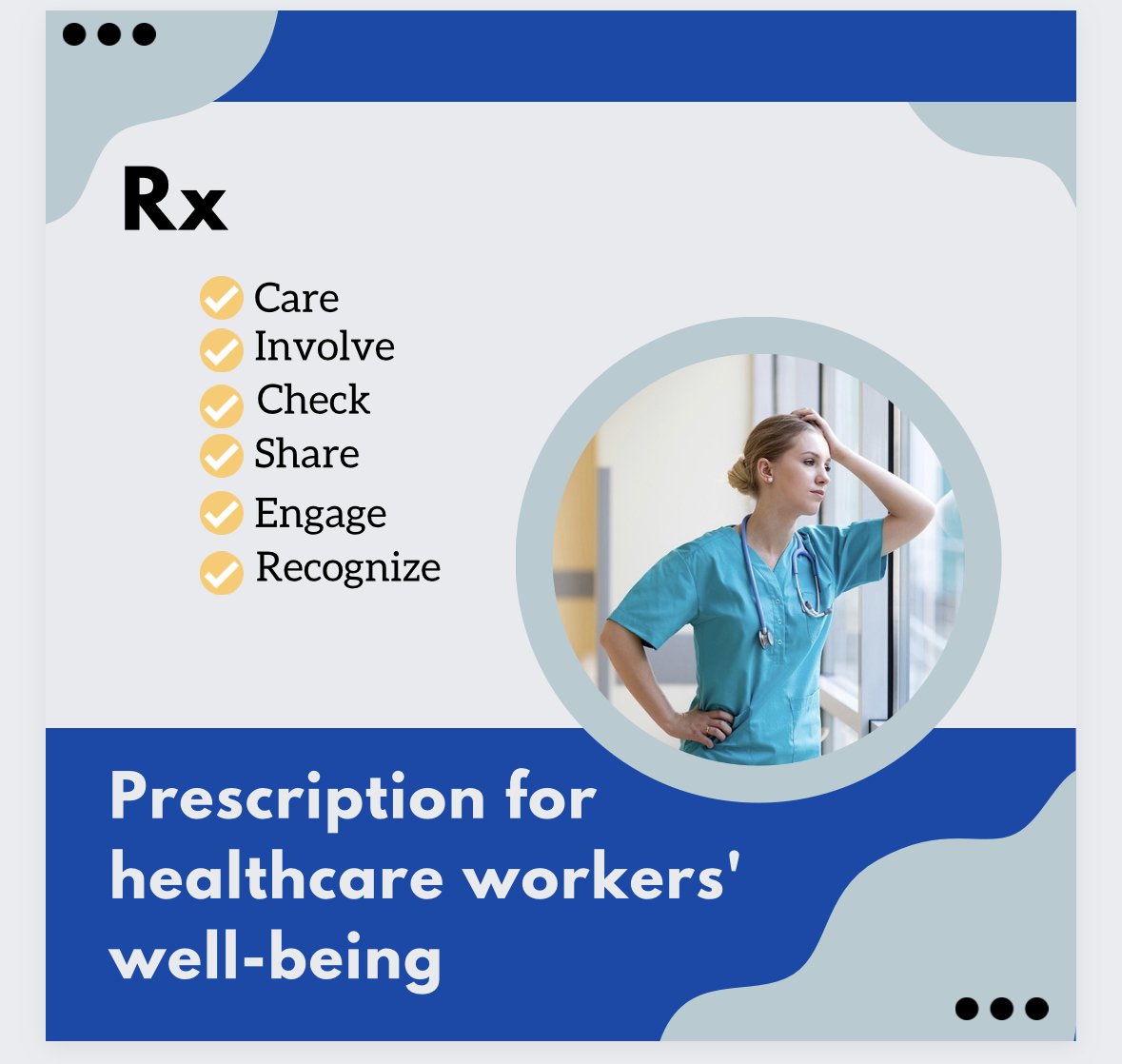
Over several hospitals, I have used six elements to keep wellbeing on the management agenda.
Care. Be present, especially when it is hardest. During the pandemic, many leadership teams stopped rounding for infection-control reasons, leaving staff to cope alone. We kept visiting intensive care units and wards. We heard what staff needed and could act quickly, sometimes on things as simple as food for teams who had no time to reach the cafeteria.
Involve. Keep everyone informed. Weekly virtual town halls let us reach hundreds of staff at once with news on progress, new services and changes, so nobody learned about their own hospital from rumour.
Check. Measure it. Independent engagement and workplace surveys, benchmarked against other hospitals in the region, showed us where we stood and whether we were improving.
Share. Give staff a voice. An occurrence reporting system open to ideas and concerns, not only incidents, and a personal letter from the chief executive to every new employee after their first month, with a direct contact if they needed help.
Engage. Build community. A staff-led engagement group, deliberately without managers, organised celebrations across cultures and faiths, from Eid and Diwali to Onam and Christmas. Regular lunches with the chief executive, five staff from different departments at a time, produced some of our best improvement ideas.
Recognise. Every person wants their work to be noticed, individually and as a team.
Making it last
Wellbeing initiatives fade when they depend on one enthusiastic leader. To last, they need a cross-functional wellbeing team with real authority, a review of the administrative burden that drives burnout, confidential routes to help without stigma, wellbeing measures built into quality improvement, and a long-term plan with goals the board reviews.
Technology can help, particularly AI that reduces documentation and administrative work. But it is no substitute for a leader who asks the question and listens to the answer.
Questions for boards and leadership teams
- How do we measure staff wellbeing, and how often does the board see the results?
- Can a member of staff seek help for their mental health confidentially and without fear for their career?
- Which administrative tasks could we remove from clinicians this year?
If your staff do not smile, your patients never will. Start by asking how they are.
Dr Fatih Mehmet Gul is a physician and healthcare executive who has built, commissioned and led hospitals across the Gulf and Türkiye. He is an Honorary Professor at UCL Global Business School for Health, author of Connected Care, and host of The Chief Healthcare Officer podcast.
More insights →