Commissioning a Hospital Is a People Project
Buildings and equipment are the easy part of opening a hospital. Whether it opens safely, on time and ready to grow depends on leadership, and on one team working to one plan.
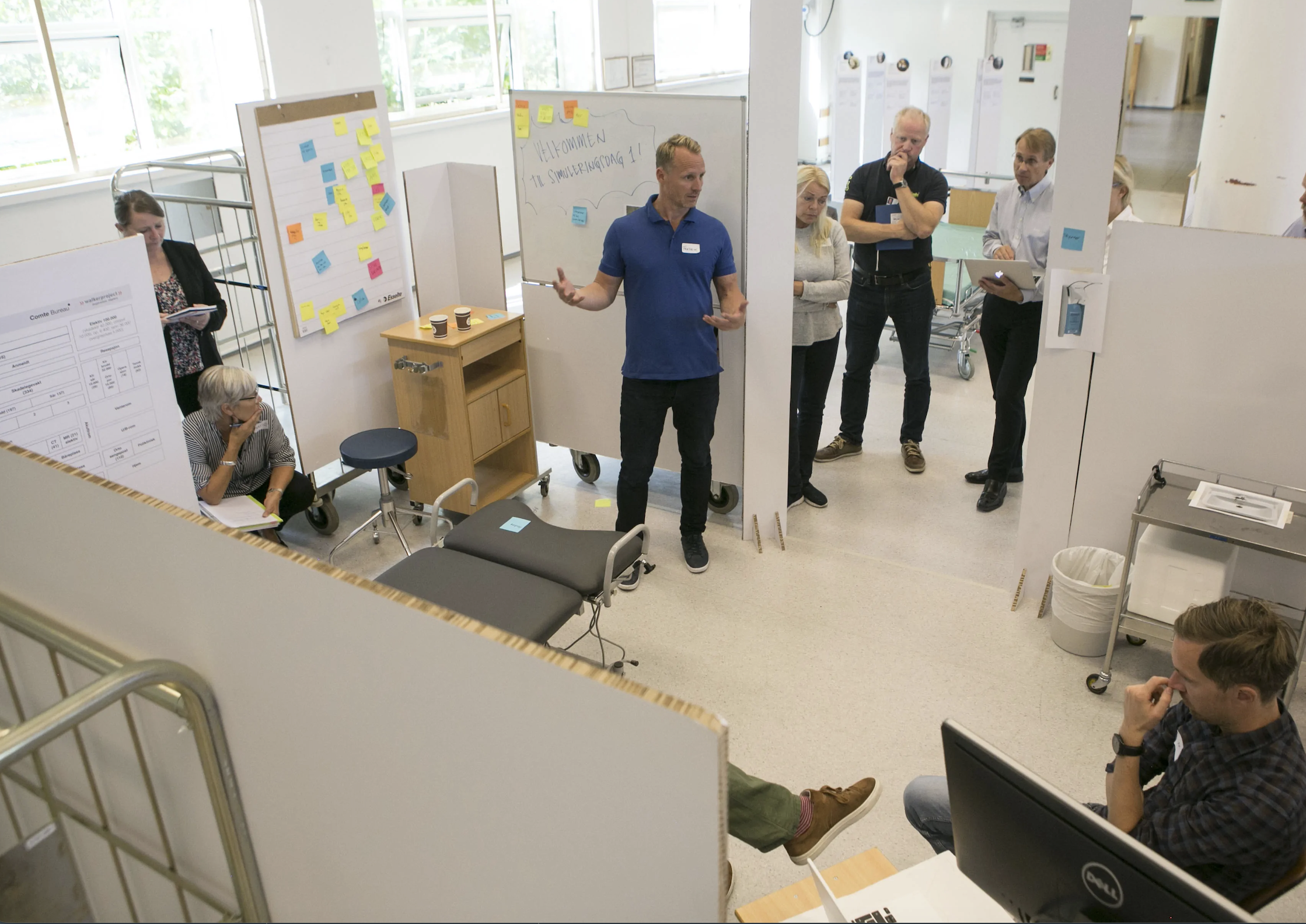
I have commissioned four hospitals, and I am now working on a fifth. Each time, the technical side has been demanding but predictable. Contractors deliver, equipment arrives, systems are tested. What is not predictable is the space between the people doing that work: the architect and the nurse, the engineer and the surgeon, the project manager and the finance team. That is where commissioning succeeds or fails.
Why this matters now
The Gulf is in the middle of one of the largest hospital building programmes in the world. Boards and investors will judge these projects on two things: how quickly the hospital opens, and how quickly it reaches safe, sustainable activity once it does. A building that is finished but not ready leaves both of those numbers exposed, and on the first day it is clinical risk as well as commercial.
On paper, commissioning is a sequence: pre-design, design, construction, testing, activation and the months after opening. Each phase has its own consultants, contracts and checklists. In my experience, the checklists rarely fail. The handovers between phases, and between people, are where things go wrong.
What I have seen work
One accountable leader, from design to first patient. Somebody has to hold the vision of what the hospital is for, and keep it intact as the project passes through its phases. That person needs authority over both the construction and the clinical side. Without that, every phase optimises for its own milestone, and the hospital that opens is not quite the one that was designed.
Clinicians at the design table, not only at sign-off. The decisions that shape patient flow, infection control and staff workload are made early, in drawings. A teaching hospital adds a further layer: it has to be designed for learning as well as for care. When we built Fakeeh University Hospital in Dubai, a USD 500 million greenfield teaching hospital delivered through the pandemic, teaching and training had to be part of the brief from the start, not added afterwards.
One plan, one rhythm. In the final months before opening, the number of moving parts grows daily. A short daily huddle, with every workstream in the same room looking at the same plan, does more for coordination than any reporting tool. At NEOM, we opened the first hospital as a tertiary care centre three hours from the nearest city, with no established health system around it to fall back on. Work like that depends on teams that see the same priorities every morning.
Look after the team that does the work. Commissioning teams work long hours under pressure, often far from home. Recognition, honest communication about setbacks and visible leadership on site are not soft extras. They are how you keep experienced people through to opening day and beyond.
Questions for boards and leadership teams
- Who is the single executive accountable from design to first patient, and do they have authority over both the construction and the clinical teams?
- Are clinicians shaping the design, or only approving finished drawings?
- What is the plan for the first ninety days after opening, and who owns it?
A building can be handed over. A hospital has to be built by people who trust each other.
Related listening: I discussed building Fakeeh University Hospital with Abrar Hussain on The Market Makers in Middle East & Africa podcast.
Dr Fatih Mehmet Gul is a physician and healthcare executive who has built, commissioned and led hospitals across the Gulf and Türkiye. He is an Honorary Professor at UCL Global Business School for Health, author of Connected Care, and host of The Chief Healthcare Officer podcast.
More insights →