What an International Academic Affiliation Should Deliver: Lessons from Cedars-Sinai
An international affiliation is worth only what it changes inside your own hospital. Visiting Cedars-Sinai with my team from The View Hospital showed what a strong academic partnership can deliver, well beyond the name on the door.
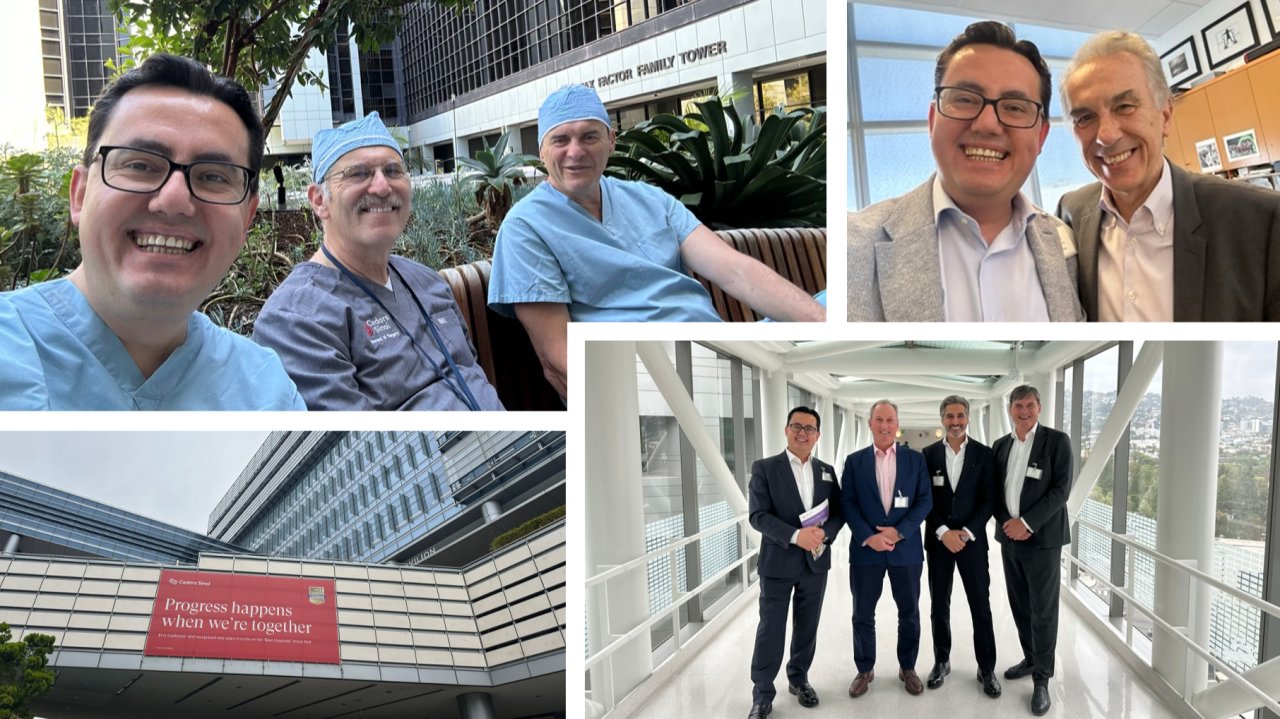
We travelled to Los Angeles to spend time with Cedars-Sinai's leadership, from President and CEO Dr Peter Slavin to Dr Heitham Hassoun and the Cedars-Sinai International team. The campus has scale and energy, and an unexpected signature: art everywhere, from the meeting rooms to the corridors. It echoed a belief we share: medicine is art, and art is medicine.
Governance that is lived weekly
The most valuable part of an affiliation is often invisible. Cedars-Sinai's leader for international medical governance met with me every week to review developments at The View Hospital. That rhythm of clinical oversight, not occasional visits, is what transfers standards.
Education and research
We discussed an AI-centred academic programme, faculty exchanges, joint research and cross-border training, and visited a simulation centre that brings experiential learning to life. A Gulf hospital that wants to be academic needs these pathways for its own people.
Clinical programmes with depth
The cardiovascular programme performs procedures on a scale few institutions match, with hundreds of heart and lung transplants in five years. Oncology is advancing personalised care through data and precision medicine partnerships. Paediatrics is moving towards ambulatory models, which aligned with our own direction. These conversations shaped the programmes we were building in Qatar.
People, quality and experience
We explored leadership development for middle managers, often the weakest link in hospital organisations. The quality team showed how they put high-reliability principles into daily operations, and nursing leaders described a model that empowers teams while holding them accountable. The patient experience team linked real-time patient feedback with employee experience, a practical approach we took home.
Digital practice embedded in the record
Cedars-Sinai's digital initiatives, from voice assistants in patient rooms and AI-supported documentation to logistics robots, are built into the EHR and analytics rather than bolted on. Virtual reality for pain management showed how innovation can also be gentle and human.
The common lesson
Talking through dashboards and daily operations, we found we face the same problems, whatever the country or organisation. That is the real value of collaboration: not copying a model, but learning from peers who have solved what we are working on.
Questions for boards and leadership teams
- What has our international affiliation changed in our clinical governance this year?
- Are our clinicians and managers using the education and exchange pathways the partnership offers?
- Which partner programmes could we adapt to our population, not just admire?
- How do we measure the return on the affiliation fee?
An affiliation is worth only what it changes inside your own hospital.
First published in The Chief Healthcare Officer newsletter on LinkedIn.
Related reading: International patients and medical travel · What a hospital turnaround teaches
Dr Fatih Mehmet Gul is a physician and healthcare executive who has built, commissioned and led hospitals across the Gulf and Türkiye. He is an Honorary Professor at UCL Global Business School for Health, author of Connected Care, and host of The Chief Healthcare Officer podcast.
More insights →