Small Teams, Big Thinking: Leadership and Obesity Science with Prof. Toni Vidal-Puig
Breakthroughs rarely come from the largest, best-resourced teams. They come from small, diverse teams trusted to take risks, and from leaders who build relationships long before a crisis needs them.
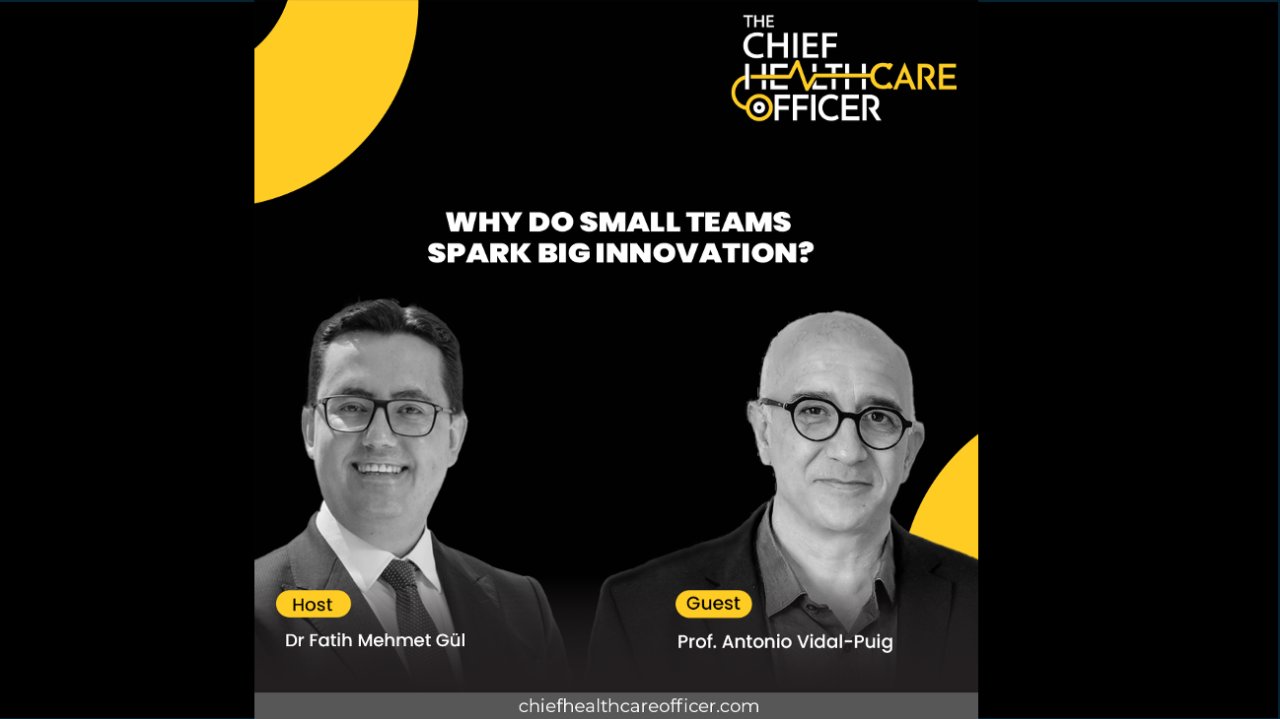
On The Chief Healthcare Officer podcast I spoke with Professor Toni Vidal-Puig, one of the world's leading experts in metabolic research and obesity, and a reflective, strategic leader. Our conversation covered science, leadership, crisis and trust across cultures.
Small teams allow experimentation
Innovation needs teams that are free to try, fail and challenge the status quo. If you want to innovate, you must accept that many attempts will fail; when one works, the outcome can be transformative. The lesson applies from the research laboratory to the hospital ward. We do not need more hierarchy. We need focus, autonomy and shared purpose.
Leading through crisis runs on trust
During COVID-19, Professor Vidal-Puig helped secure personal protective equipment for UK frontline workers through relationships he had built over years of research collaboration in China. It was not a transaction. It was mutual respect, and it became a lifeline when it mattered most. In a crisis, leadership is not about titles. It is about people who step up, see ahead and mobilise their networks with integrity.
Moving beyond BMI
As a scientist he challenges how we understand obesity. His adipose tissue expandability hypothesis argues that the danger is not fat itself but the body's limited capacity to store it safely; when storage overflows, fat accumulates where it harms organs. Brown fat may act as a metabolic "vacuum cleaner", absorbing excess sugars and fats. In a moment dominated by GLP-1 enthusiasm, this nuance matters: progress comes from curiosity, not shortcuts.
Partners, not teachers
He argues for respectful, long-term research partnerships across borders, including in Asia: going to partner, not to teach. The next solutions in chronic disease, ageing and public health will come from shared intelligence across cultures.
Questions for boards and leadership teams
- Where in our organisation do small teams have genuine freedom to experiment and fail?
- Which relationships would we need in a crisis, and are we investing in them now?
- Does our obesity and metabolic care go beyond weight and prescriptions?
- Do our international partnerships work both ways?
In a crisis, leadership is not about titles. It is about people who step up and mobilise their networks with integrity.
Listen to the full episode at chiefhealthcareofficer.com.
First published in The Chief Healthcare Officer newsletter on LinkedIn.
Related reading: Diabetes, employers and the GCC · Execution in healthcare
Dr Fatih Mehmet Gul is a physician and healthcare executive who has built, commissioned and led hospitals across the Gulf and Türkiye. He is an Honorary Professor at UCL Global Business School for Health, author of Connected Care, and host of The Chief Healthcare Officer podcast.
More insights →