The Coming Wave and the Future of AI in Healthcare
Mustafa Suleyman's The Coming Wave asks how humanity can keep control of technologies more powerful than any before. For hospital leaders, that question is already practical.
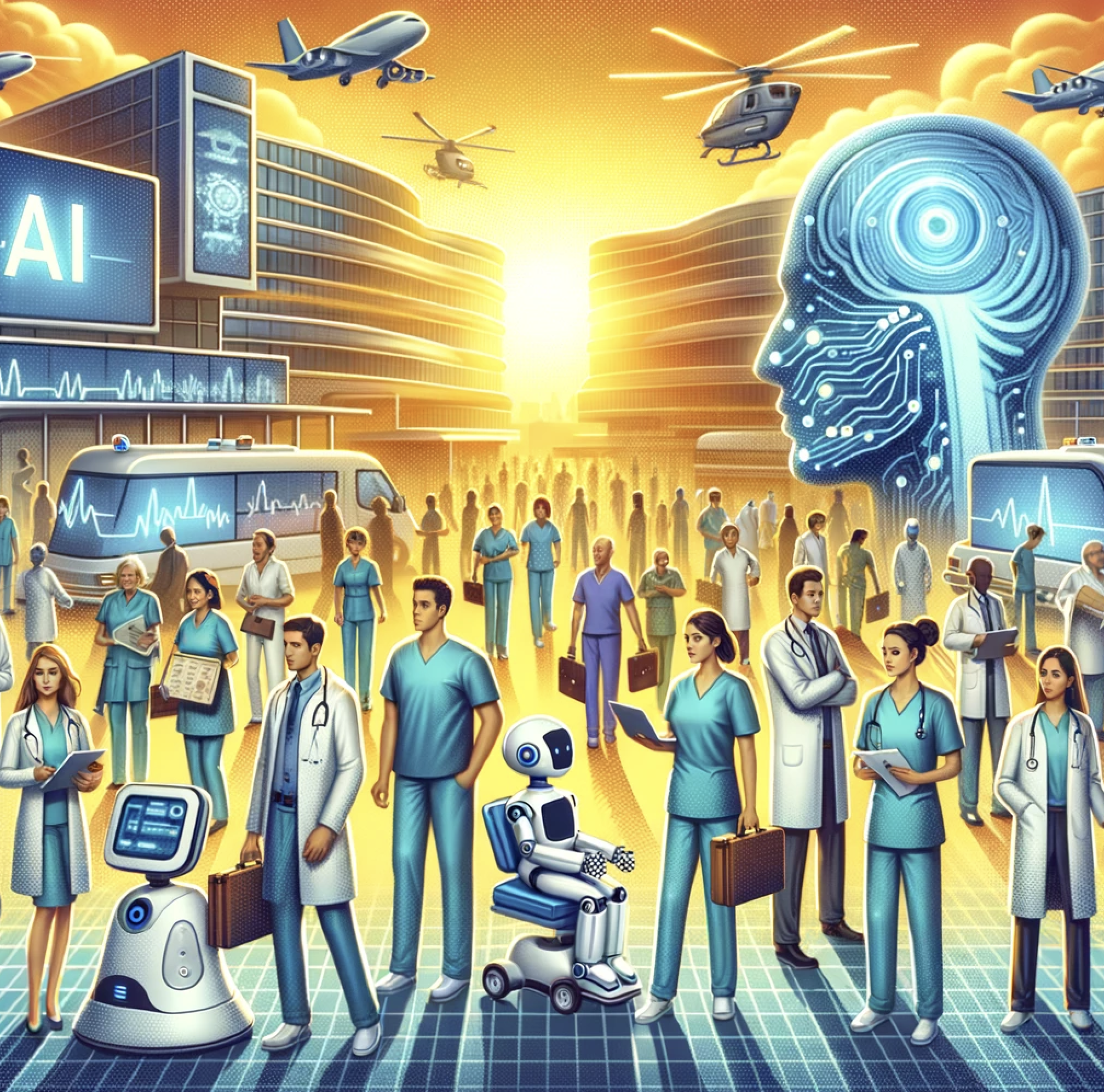
Suleyman, a co-founder of DeepMind, writes as an insider. His book describes AI and related technologies as a wave that cannot be stopped, bringing enormous benefits and serious risks at the same time. I read it as a hospital chief executive already using AI, and found it one of the clearest frameworks for thinking about what comes next.
What the book argues
AI is moving from prediction to action. Earlier waves of data science helped us predict. The coming wave will act on those predictions automatically. In medicine, that means systems that do not only flag a likely diagnosis but recommend or initiate treatment.
Containment is the central problem. The more powerful a technology, the harder it is to control. Suleyman argues that keeping powerful AI safe requires deliberate effort from developers, organisations and governments.
It cuts both ways. The same capabilities that enable breakthroughs can produce disastrous errors or be misused.
Regulation and cooperation are essential. He calls for strong rules and international collaboration, and for financial incentives that reward safe adoption.
What it means for healthcare
Healthcare already knows how to manage powerful, risky interventions. We license clinicians, approve medicines, accredit hospitals and investigate errors. AI needs the same discipline, adapted to its speed. For hospital leaders, containment translates into clear questions: who approves an algorithm, on what evidence, how its performance is monitored, how patients' data are protected, and who is accountable when it is wrong.
The goal should be collaborative intelligence: machines and clinicians working together, each covering the other's weaknesses, with clinical judgment kept at the centre. Algorithms already match or exceed specialists in some narrow diagnostic tasks. That makes the human role more important, not less.
Genomics and personalised medicine will accelerate alongside AI, and with them the volume of data each clinician must interpret. Synthesis, not data, will be the scarce resource.
Questions for leadership teams
- Who in our organisation is accountable for the safety of the AI tools we use?
- How would we know if an algorithm's performance deteriorated?
- Are we preparing clinicians to work with AI, or leaving them to discover it on their own?
We cannot stop the wave. We can decide how it reaches our patients.
Dr Fatih Mehmet Gul is a physician and healthcare executive who has built, commissioned and led hospitals across the Gulf and Türkiye. He is an Honorary Professor at UCL Global Business School for Health, author of Connected Care, and host of The Chief Healthcare Officer podcast.
More insights →