The Culture Map: Leading Multicultural Hospital Teams
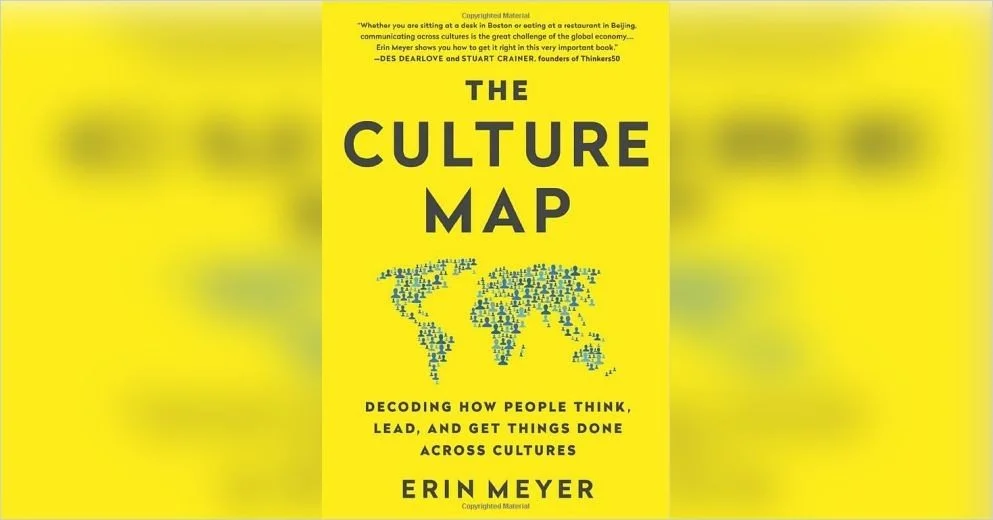
Gulf hospitals run on teams drawn from dozens of countries. Erin Meyer's The Culture Map is the most practical guide I know to making those teams work.
On a visit to one of our operating theatres, I stood watching a team at work: surgeons trained in the United Kingdom and Saudi Arabia, an Egyptian anaesthetist, a Moroccan technician, and nurses from India, Saudi Arabia and the Philippines. They worked together smoothly. That did not happen by accident, and in many hospitals it does not happen at all.
For most of my career I have worked between cultures: Turkish by origin, leading hospitals in Saudi Arabia, the UAE and Qatar, and building partnerships with American, Korean and German academic medical centres. Meyer's book put names to patterns I had seen for years.
What the book argues
Meyer maps cultures along eight scales, each describing a different way people work together:
- Communicating: explicit and literal, or high-context and implicit.
- Evaluating: direct or indirect negative feedback.
- Leading: egalitarian or hierarchical.
- Deciding: by consensus or from the top.
- Trusting: built through tasks or through relationships.
- Disagreeing: open confrontation or avoiding it.
- Scheduling: linear or flexible time.
- Persuading: principles first or applications first.
Her central point is that culture is relative. Nobody is simply "direct" or "hierarchical"; they are more or less so than the people around them. Misunderstandings come from the gaps.
Why it matters in healthcare
In a hospital, those gaps are a safety issue. A nurse from a hierarchical culture may hesitate to challenge a senior surgeon. A consultant used to direct feedback may be heard as hostile. An international partner that builds trust through tasks may misread a Gulf counterpart who builds it through relationships, and vice versa. Each of these can delay a decision, damage a partnership or harm a patient.
Leaders who understand these patterns can design for them: making speaking up safe and expected regardless of rank, being explicit about how decisions will be made, and investing time in relationships before asking partners to trust a plan.
Questions for leadership teams
- Do junior staff in our hospital feel safe to challenge a senior colleague, whatever their background?
- When we work with international partners, have we discussed openly how each side makes decisions and builds trust?
- Do we train leaders in cross-cultural management, or assume they will learn it on the job?
In a multicultural hospital, understanding culture is not a soft skill. It is part of patient safety.
Dr Fatih Mehmet Gul is a physician and healthcare executive who has built, commissioned and led hospitals across the Gulf and Türkiye. He is an Honorary Professor at UCL Global Business School for Health, author of Connected Care, and host of The Chief Healthcare Officer podcast.
More insights →