From MRI Machines to AI Platforms: The Shift I Saw at WHX Dubai 2026
The biggest change at the region's largest healthcare exhibition was not the venue or the name. It was that the conversation moved from the machines inside the hospital to the intelligence that runs the whole patient journey.
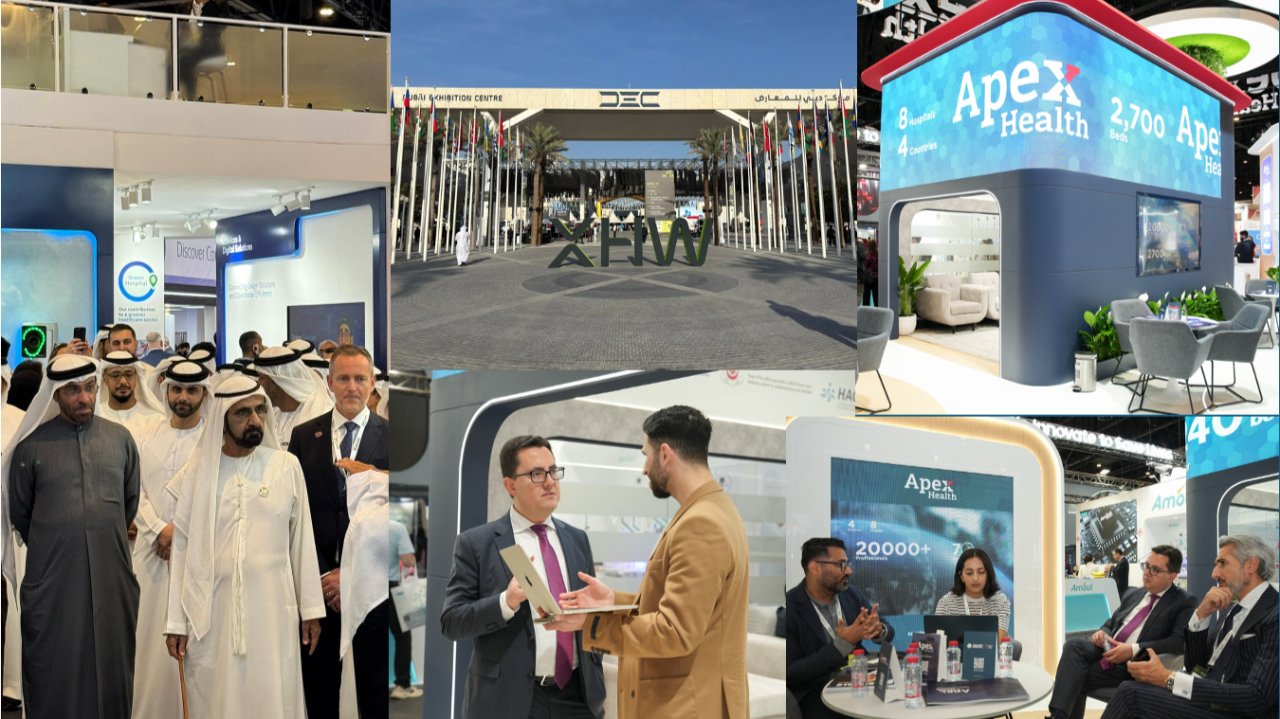
For decades we knew it as Arab Health. In 2026 it became WHX Dubai, the World Health Exhibition, and moved to Expo City Dubai, bringing together tens of thousands of healthcare professionals from more than 180 countries. The learning started before I boarded the plane: at Doha airport I fell into conversations with doctors, hospital executives and founders about the workforce, Gulf insurance trends and AI in clinical settings.
From modality to solutions
In previous years the exhibition was largely about hardware: MRI and CT scanners, ultrasound, surgical robots. This year, the corridors were full of people with half-open laptops pitching software. Patient data platforms, smart scheduling, education for physicians and nurses, discharge optimisation, medication management, AI decision support.
One that caught my attention was Concentric Health, which digitises surgical consent. Anyone who has worked in a hospital knows consent is one of the most paper-heavy and error-prone workflows we run. A platform that helps surgeons manage it and helps patients actually understand the procedure and its risks solves a real, everyday problem. That is the kind of innovation that matters to a hospital CEO: not flashy, but useful.
The future of healthcare is not only the equipment inside the hospital. It is the intelligence that connects the patient journey.
Healthcare in the GCC is becoming employer-sponsored
I spoke this year on healthcare costing and service development in the GCC. Drawing on my experience leading hospitals in Saudi Arabia, the UAE and Qatar, my argument was that healthcare in the region is rapidly becoming employer-sponsored.
That changes how hospitals should plan. If most care is paid for through employer-sponsored insurance, hospital leaders can no longer design services in isolation from the business world. We need to understand employer trends, speak the language of employer CFOs, and build services that match what employers want from their health benefits, not only what clinicians think patients need. Very few hospitals in the region do this well. It means treating healthcare as a business without ever losing sight of it as a mission.
Healthcare is a people business
The best moments were in the corridors: a 30-minute walk that should have taken five, because every turn brought another conversation. I met a friend from 2015, now leading international business at Mount Sinai Health System, for the first time in nearly a decade. At the UCL Global Business School for Health gathering, hospital executives, investors, founders and researchers mixed easily. Relationships remain the foundation of everything we do.
Questions for boards and leadership teams
- What share of our capital plan is going to hardware, and what share to the software that runs the patient journey?
- Which of our everyday workflows, such as consent, is still paper-heavy and error-prone?
- Do we know what the largest employers in our market want from their health benefits?
- Who in our leadership team speaks the language of the employer CFO?
The day you stop learning in healthcare is the day you start falling behind.
First published in The Chief Healthcare Officer newsletter on LinkedIn.
Related reading: Diabetes, employers and the GCC · The digital front door
Dr Fatih Mehmet Gul is a physician and healthcare executive who has built, commissioned and led hospitals across the Gulf and Türkiye. He is an Honorary Professor at UCL Global Business School for Health, author of Connected Care, and host of The Chief Healthcare Officer podcast.
More insights →