AI in Diagnostics: Notes from Abbott's AI in Healthcare Advisory Board
AI is not here to replace doctors, nurses or laboratory scientists. It is here to amplify their expertise, reduce their burden and let them focus on healing patients. How we design and implement it decides whether that happens.
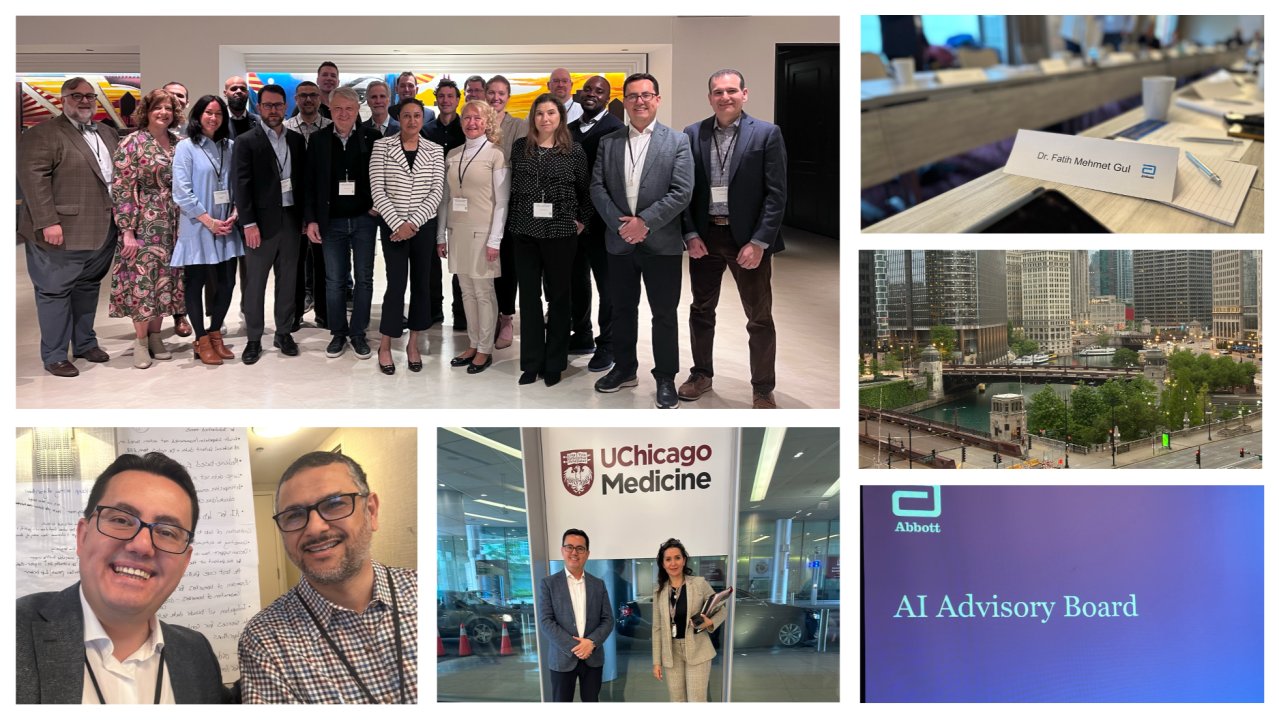
I joined Abbott's AI in Healthcare Advisory Board in Chicago, alongside leaders including the President of the American Medical Association, the CEO of PathAI, and clinicians and scientists from Mayo Clinic, Children's Hospital of Philadelphia, Washington University, King Faisal Specialist Hospital, University Hospital Bonn and the University of Padova. At times it felt like walking through the future Mustafa Suleyman describes in The Coming Wave.
One central question
How can AI be built into healthcare so that it supports clinicians, strengthens diagnostics and improves outcomes, without compromising the human touch? The discussion followed real-world problems rather than technology: where the market needs help, where workflows bottleneck, which clinical use cases are ready for AI, and which product features genuinely add value.
AI that works alongside experts
PathAI's work in pathology was a good example. Pathologists already do extraordinary work on complex tissue samples, often under heavy workloads. AI that reviews every corner of a slide with speed and precision supports them in exactly the places where tired human eyes struggle. That is augmentation, not replacement.
The scenario workshops, including designing products under real budget constraints, were a reminder that adoption depends as much on economics and workflow as on accuracy.
Collaboration across borders
In Chicago I also visited UChicago Medicine, whose international programme already serves patients from Qatar. The best results in healthcare come from collaboration, locally and globally, between clinicians, industry, academia and health systems.
Questions for boards and leadership teams
- Which diagnostic workflows in our hospital are under the most workload pressure, and could AI support them safely?
- Do our clinicians help shape AI products, or only receive them?
- Have we tested AI tools against our real budget and workflow constraints, not just a demonstration?
- Which international partnerships could bring us expertise we cannot build alone?
Technology alone is not the solution. The way we design, implement and humanise it makes the difference.
First published in The Chief Healthcare Officer newsletter on LinkedIn.
Related reading: The Coming Wave · Why accurate AI fails in hospitals
Dr Fatih Mehmet Gul is a physician and healthcare executive who has built, commissioned and led hospitals across the Gulf and Türkiye. He is an Honorary Professor at UCL Global Business School for Health, author of Connected Care, and host of The Chief Healthcare Officer podcast.
More insights →