AI Scribes: A Hospital Leader's Guide to Choosing Well
Let doctors focus on patients while AI handles the paperwork. AI scribes are no longer a futuristic novelty; they are a strategic decision every hospital leadership team now has to make well.
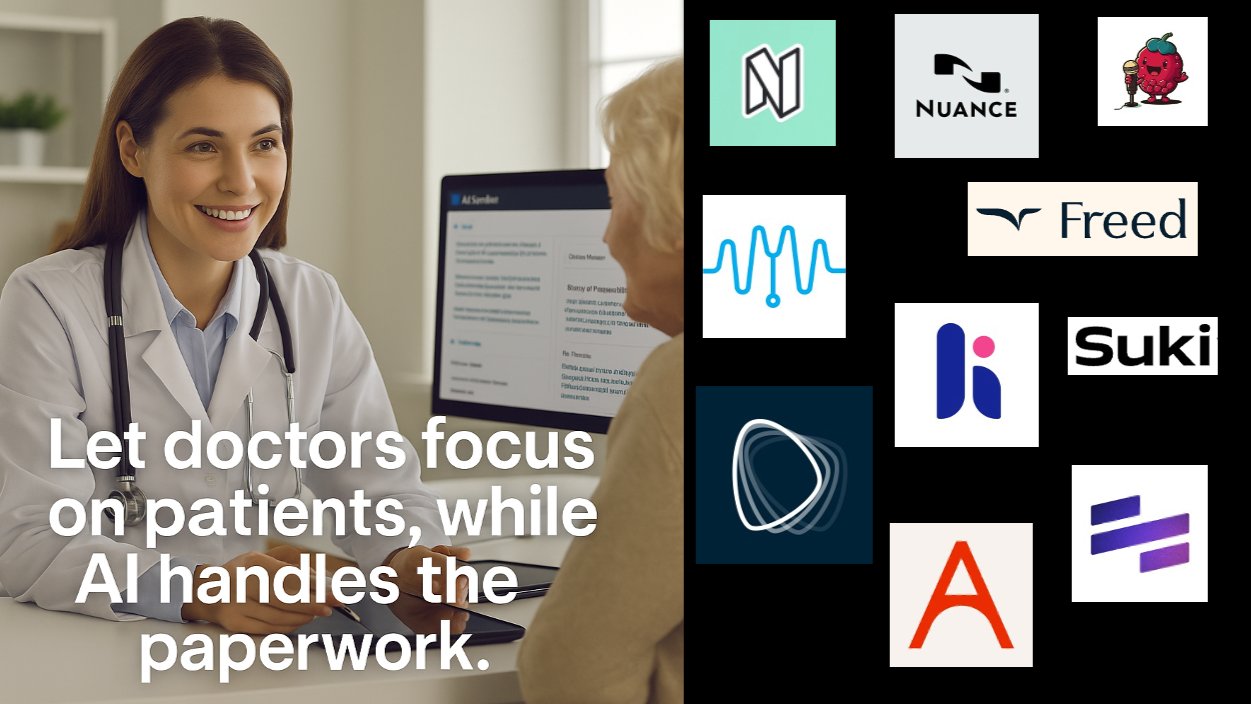
AI scribes listen to clinical conversations and produce structured notes in real time. As physicians carry more documentation, coding, claims and regulatory work, the administrative load strains both clinicians and operations. That is why competition among scribe companies is intense, and why choosing well matters.
What the early evidence shows
- At University of Iowa Health Care, a pilot reported a 26% reduction in clinician burnout within five weeks.
- The Permanente Medical Group deployed an AI scribe to more than 3,400 doctors and over 300,000 visits in ten weeks, with clinicians saving around an hour a day on average.
- At Mass General Brigham, after-hours documentation fell from about 90 minutes to under 30, and most physicians said they felt more present with patients.
The wellbeing benefits are encouraging. The financial and efficiency benefits are still emerging in broader studies, so measurement matters.
Where AI-only scribing still struggles
Accuracy and context. Specialty jargon, abbreviations, accents, background noise and several speakers all degrade performance. A misheard phrase can create an inaccurate record with clinical and legal consequences.
Physician trust. If clinicians spend their saved time correcting notes, the benefit disappears.
Compliance and security. Recording consultations raises real obligations on consent, privacy and data protection.
Workflow fit. A scribe that does not sit inside the existing record, or cannot adapt to specialty documentation, adds friction instead of removing it.
The market is moving fast
Large systems are switching vendors when value is not delivered, and EHR suppliers such as Epic are building their own generative AI documentation. For buyers, that means low switching costs and integration should be part of every contract conversation.
What to demand from a vendor
- Seamless integration with your EHR and specialty templates.
- Multilingual capability, essential in the Gulf and other diverse workforces.
- Support for nurses, therapists and care coordinators, not only physicians.
- Ethical design: transparent patient consent, privacy-first architecture and bias monitoring.
- Proven scalability and an agreed way to measure benefit.
Questions for boards and leadership teams
- How will we measure the benefit: time saved, burnout, note quality, patient experience, or revenue?
- How do patients give consent, and what happens when they decline?
- Does the tool work in all the languages our clinicians and patients speak?
- Are we locked in, or can we switch if a better solution arrives?
The right AI scribe extends a clinician's mind while keeping their focus where it belongs: with the patient.
First published in The Chief Healthcare Officer newsletter on LinkedIn.
Related reading: If I don't scribe it, I lost the meeting · Physician burnout is a transparency crisis
Dr Fatih Mehmet Gul is a physician and healthcare executive who has built, commissioned and led hospitals across the Gulf and Türkiye. He is an Honorary Professor at UCL Global Business School for Health, author of Connected Care, and host of The Chief Healthcare Officer podcast.
More insights →