Closing the Healthcare Workforce Gap Through Medical Education
The world is short of health workers, and traditional medical education is too slow, too costly and too inaccessible to close the gap alone. For hospital leaders, education is also the most underused retention strategy.
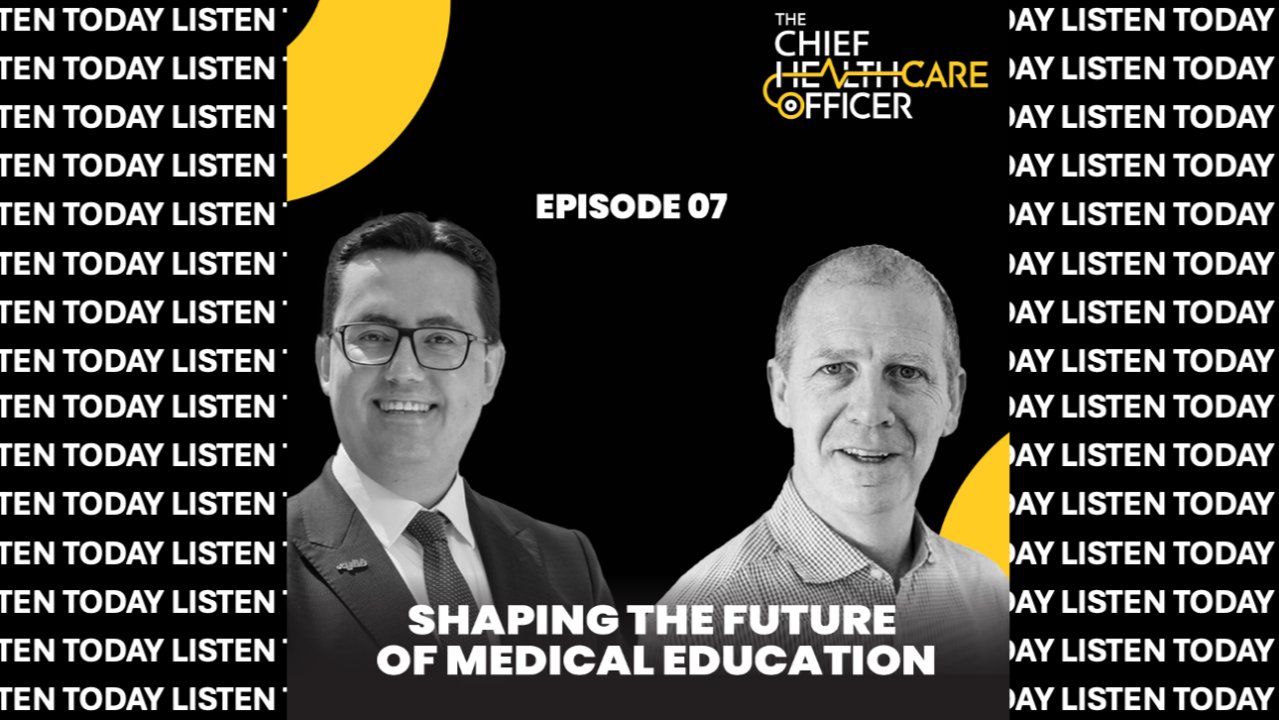
On The Chief Healthcare Officer podcast I spoke with Dr Tom O'Callaghan, physician, entrepreneur and CEO of the Medical Education Founders Investment Fund, about how new approaches to training can help close one of healthcare's most serious gaps.
A global shortage, unevenly felt
The World Health Organization expects a significant shortfall of health workers by 2030, especially in nursing and primary care. Migration of clinicians from lower-income countries to wealthier ones deepens the gap where it already hurts most. The Gulf, which recruits internationally, is part of that story and has a responsibility to train as well as hire.
Education must scale
Traditional training models are slow and expensive. Online and blended learning can make education faster and more accessible to a wider range of aspiring professionals. Investors are now backing virtual reality clinical training, AI-personalised learning and digital education platforms. Simulation in virtual and augmented reality offers safe, repeatable clinical practice without depending entirely on costly simulation laboratories.
Learning is a retention strategy
Dr O'Callaghan's most practical point for hospital leaders: continuous education keeps people. Staff who see the organisation investing in their growth are more loyal and less likely to leave. Educational partnerships with universities and training providers, and AI-supported learning for staff, are investments in workforce stability, not overheads.
Questions for boards and leadership teams
- How much do we invest per employee in continuous education, and how does it compare with what we spend on recruitment?
- Do we train local talent, or depend entirely on international hiring?
- Which academic partnerships could create a pipeline of nurses and primary care clinicians for us?
- Are we using simulation and digital learning to train faster and more safely?
Investing in the continuous learning of staff is one of the most effective ways to keep them.
Listen to the full episode at chiefhealthcareofficer.com.
First published in The Chief Healthcare Officer newsletter on LinkedIn.
Related reading: Building resilient healthcare workplaces · Will AI replace hospital employees?
Dr Fatih Mehmet Gul is a physician and healthcare executive who has built, commissioned and led hospitals across the Gulf and Türkiye. He is an Honorary Professor at UCL Global Business School for Health, author of Connected Care, and host of The Chief Healthcare Officer podcast.
More insights →