Care Is a Relationship. Everything Else Is Infrastructure.
Hospitals have never had more technology, yet patients and caregivers feel less seen. Reflections from my Beryl Institute webinar on keeping the human touch at the centre of every technology decision.
On 24 November 2026 I had the pleasure of joining The Beryl Institute for a Headliner webinar, Connected Care: Leading the Human Touch in a Technology-Driven Hospital. For some colleagues it was the middle of the day, for others the day was just starting. Thank you to everyone who joined, voted in the polls and filled the chat with such thoughtful answers.
We ran out of time for the questions, which tells me the conversation is far from finished. So I want to put the main ideas down here, and I will come back to your questions in the coming weeks.

Let me start with a confession. I am a physician, and I love technology. I have commissioned four hospitals and I am now preparing for my fifth. Over the years I have invested in and implemented many technology solutions. So please don't get me wrong, this is not an argument against technology. It is an argument for the right technology, implemented in the right way.
The real problem is disconnection
We love to talk about engagement and connection with our patients. But the main problem of today's healthcare, in my view, has a different name: disconnection.
Disconnection between the patient and the hospital. Between colleagues in the same organisation. Between caregivers and their leaders. Between the hospital and its community.
And disconnected care is expensive, not only for us but for the whole country. Patients start shopping between doctors. Medication adherence drops. Teams burn out. Information gets stuck in silos and the system strains. Very often, the way we use technology is widening this gap rather than closing it.
My green dashboard
Some years ago, like every CEO, I was busy with dashboards. One day my operations dashboard was almost completely green. I was a happy and proud CEO.
Then I walked out of my office to the orthopaedic outpatient department next door. In front of reception there was a family who had been waiting for more than an hour. They were frustrated, and rightly so.
My dashboard was green because it was built on averages. The average was fine. That family was not.
So we changed the logic. If any patient waited more than 30 minutes, the system triggered an escalation, first to the OPD director, then to the COO, then to me. A static screen became a live tool that responded to one person's experience.
That, for me, is what adding the human touch to technology means. Put yourself in the patient's shoes, then calibrate the operation around how care is actually experienced.
Our patients already live in a digital world
Our patients bank, travel and shop digitally. Here in Dubai I can order groceries at any hour, even by drone. When the same people come to our hospitals, they expect the same.
So every organisation, from the small clinic to the tertiary centre, is under pressure. Every week another company comes with a kiosk, an AI scribe, a WhatsApp solution. But a delivery company may spend months, with engineers and testers, on one WhatsApp flow serving millions of customers. Our bandwidth in healthcare is not the same. We often buy something off the shelf, not well tried, and switch it on. And sometimes it ruins even the offline experience we spent years building.
One simple recommendation: ask your patient experience team to start a digital patient experience project, including a digital satisfaction survey. In most hospitals I visit, the survey still asks only about parking, reception and discharge. Other industries are living in the future, and we are still asking the questions of the past.
When technology becomes a barrier
A few real examples I shared in the session:
- The mother at 2 a.m. Her baby has a fever and the call centre is closed for the night. She can't sleep, and at 7 a.m. she is standing at the reception of a clinic that opens at 8. A simple digital pathway could show her the availability, book the appointment and even take the history, so the doctor knows the story in the morning. Peace of mind, with a human at the end of it.
- The kiosk. Wherever I travel, Korea, Germany, Mexico, I visit hospitals. Kiosks are everywhere, many with tiny fonts and the back-office software simply pasted onto the screen. Design it for all ages, and put a person next to it. In Marks & Spencer in London the cashiers are mostly gone, but someone is always watching the machines, ready to help.
- The MRI. You spent two million dollars on the scanner. Now let the technologist explain every sound over the intercom, keep the family close, and tell the patient how they will get the result. This costs minutes, not money.
- The phone call. A board member of a 34-hospital group told me they made it mandatory for physicians to call every patient who visited the ER the day before. Not rocket science, and patients feel it.
- The website. Trying to book an ENT appointment for my daughter, I couldn't find ENT on the hospital website. It was listed as "otolaryngology". After five clicks, the first doctor's next slot was two months away. Why not simply offer me the nearest available appointment with any ENT doctor?
- The chatbot. The day before the webinar, feeling unwell myself, I tried to book through a hospital's WhatsApp bot. Too many questions, and no way to reach a human agent. I gave up and didn't book at all. I am sure the leadership team who invested in that solution has no idea.
Three things leaders tell themselves
- "Human touch costs more." Mostly it costs minutes, not money.
- "Patients want everything digital." They don't. They want help when they need it.
- "Technology will solve our staffing gap." It can free time, but it will not replace people. I recently spoke with a large group whose first AI goal was to reduce headcount. My view is different: use AI to multiply what the same team can do and see more patients. Those who release people too early will be rehiring them when they see the inefficiency, and we already see this in other industries.
Technology only multiplies what is already there, the good skills and the bad ones.
Human or machine? A simple map
In the session we sorted touch points together. The map is simple:
- Automate the transactional. Rules-based, repetitive, low-emotion tasks. Free your people from them.
- Keep a named person visible for information services. The software carries the data, but someone is accountable and can step in. If you offer WhatsApp, make sure it can hand over to a human agent at any time.
- Keep relationships human. Welcoming a patient, explaining an MRI before the scan, sharing a diagnosis. Never, ever share a cancer diagnosis by email.
This is not a regional point. In the US, in Kazakhstan, in Japan, we are dealing with human beings.
The five relationships of Connected Care
In my book, Connected Care, I structure the framework around five relationships:
- You and yourself: caregiver self-care. Human touch starts with the people who give it. When we change the EMR without asking our caregivers how they feel, we can't expect frustrated people to deliver the best care.
- You and your team. Connection inside the hospital, so a doctor knows the excellent colleague in the next room instead of referring the patient outside.
- You and your patient. Connection before, during and after the visit. Even as a doctor, I leave the consultation and remember what I forgot to ask. Can I reach the nurse? Usually not.
- Leaders and their people. One leader with two or three thousand staff cannot stay connected the regular way. I have seen leaders with 18,000 unread emails. Systematic, documented rounding, supported by technology, can help.
- The hospital and its community. Being part of the community's celebrations, problems and mourning. Do this well and even a private hospital becomes your community's hospital.
And human touch is owned by everyone, from A to Z. In a good hotel, even housekeeping greets you in the corridor. Are we teaching our people this way?
Five rules before you switch anything on
- A person in sight of every machine and every piece of software.
- Where emotion is high, software is a choice, never the only door.
- No software stands as a gate before care.
- Information travels, so the patient doesn't have to repeat it.
- Time saved by technology is reinvested in people, by decision.
And eight questions before you approve the next solution: strategic fit; empathy by design (does it enhance or interrupt face-to-face time?); workflow (does it remove friction or add it?); data responsibility; interoperability; measurable value; change readiness; augmentation. And never keep using a solution without measuring it: the trust, the outcome and the value.
Digital transformation is not an IT project
IT's job is to install. Once it is installed, for IT the job is done. Someone has to own the human touch, and that is a leadership challenge, a full operations challenge. If nobody owns it, even your beautiful website becomes a barrier.
What I'd ask you to do on Monday
- Take the free Human Touch Assessment in the Tools section of connected.care, ideally with your team.
- Download the self-teaching workshop PDF and sit with your patient experience team.
- Walk one patient journey from home to home. Mark where the human touch goes missing, and ask of every website, app, kiosk and chatbot: was it planned with a human touch, or is it a barrier in front of our operations?
Today we discuss AI. Tomorrow it will be something else. When they built the pyramids, there was a technology too. Technology will keep evolving. The question stays the same: are we really helping people?
Care is a relationship. Everything else is infrastructure.
Thank you
A big thank you to Jason Wolf and The Beryl Institute for the invitation and for the community you have built around human experience, and to Becky Reisinger for her guidance through the preparation and for hosting so smoothly on the day.
If you joined and your question wasn't answered, Becky will pass it to me and I will reply. And please try the assessment and tell me how it goes. Teach me, I'll be happy to learn from your experience.
Based on my Headliner webinar for The Beryl Institute, 24 November 2026. Also published in my LinkedIn newsletter.
Continue reading
- People First, Technology Next. Digital transformation in hospitals fails on people long before it fails on technology.
- The Healthcare Leader in the Eye of the Technology Storm. New solutions arrive weekly, and leaders are caught in the middle.
- Healthcare in 2050: Connected, or Just Digital?. We can connect a surgeon in China to a robot in Italy, yet a patient next door still struggles to reach their doctor.
Topics: #ConnectedCare · #PatientExperience · #DigitalTransformation
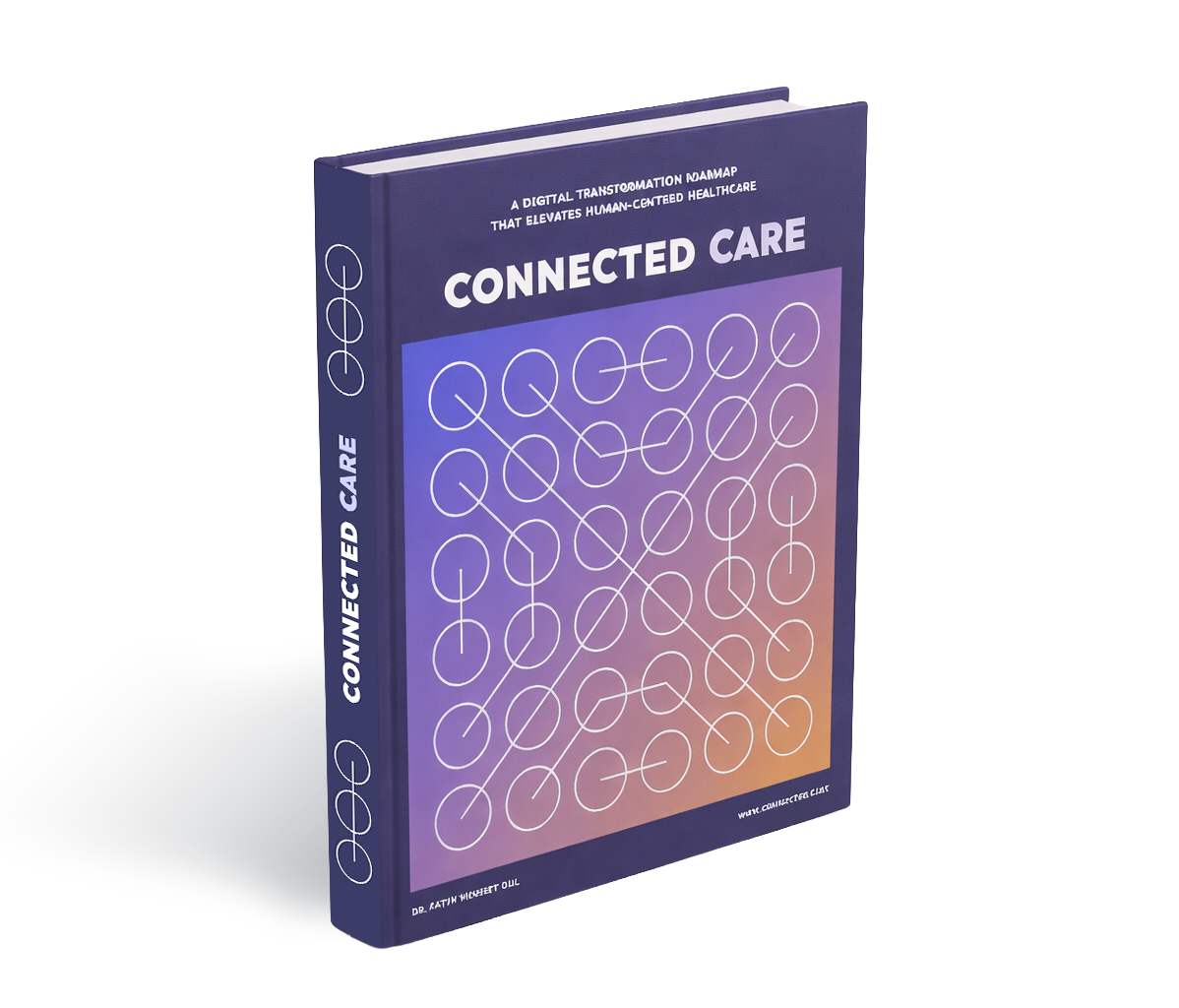
Enjoyed this article? There is more in Connected Care.
Many of the ideas here began in my book on healthcare leadership and digital transformation.
Dr Fatih Mehmet Gul is a physician and healthcare executive who has built, commissioned and led hospitals across the Gulf and Türkiye. He is an Honorary Professor at UCL Global Business School for Health, author of Connected Care, and host of The Chief Healthcare Officer podcast.
More insights →