From Scribe Mania to Strategic Intelligence: What ViVE 2026 Signals for Healthcare AI
The race to choose an AI scribe is over. The next phase of healthcare AI is about strategy, governance and agentic tools, and about whether technology helps caregivers be more human.

The ambient AI scribe race is over. Once the major EHR vendors released their own charting AI, the two-year rush by health systems to pick a scribe partner, which some at ViVE 2026 called "scribe mania", came to an abrupt end.
I do not see this as a setback for AI in healthcare. I see it as a graduation. At ViVE in Los Angeles, the conversation among health system leaders, payers and innovators had clearly matured: less hype and fewer pilots, more results and more strategy. Here are the four signals I believe matter most for healthcare leaders.
1. Scribes were the gateway, not the destination
Ambient scribing made sense. Documentation burden is real and so is physician burnout. But something got lost along the way. Scribes reduced documentation time; they did not automatically restore the connection between doctor and patient. And once the EHR vendors offered their own, the differentiator disappeared overnight. Health systems that chased the tool rather than the outcome are now recalibrating.
In Connected Care I described the real purpose of this technology: the doctor has more time for active listening, more time to understand what the patient is going through, and eye contact instead of note-taking. The scribe was always a means to an end.
So the question for a hospital CEO is not "which scribe should we pick?" It is "how does this technology restore the relationship between clinician and patient?" The best AI is invisible to patients. What they notice is that their doctor is looking at them again.
2. Agentic AI is here
The new frontier is agentic AI: tools that do not only respond but act on behalf of patients and providers. Two examples from ViVE stood out. A US health insurer deployed AI agents to handle member service calls and fully resolved around one in eight calls without a human, freeing staff for complex cases. And Sanford Health, which serves rural communities in the Dakotas, introduced a virtual nurse agent called "Jane" that proactively calls patients to book wellness visits, screenings, laboratory tests and refills. Where specialists are scarce and winter weather cancels appointments, that means fewer patients falling through the cracks.
This does not replace nurses. It extends what they can do. For leaders, the practical first step is to identify the highest-volume, lowest-complexity patient interactions, measure completion and satisfaction before and after, and use agents to reach the people who are hardest to reach.
3. Digital strategy is now infrastructure
The message I heard most clearly was that a good EHR or the best scribe is no longer the ambition. The ambition is to lift the whole health system. A hospital without a coherent digital strategy is not only behind on technology; it is behind on its mission. Patients already expect digital-first access, workforce shortages cannot be solved by hiring alone, and non-traditional competitors are building digital experiences that will attract our patients.
A simple test: does your board have a digital health strategy, not just an IT roadmap, with a named executive accountable for it?
4. Clinicians are becoming "miniature CIOs"
One of the most encouraging observations from ViVE was the number of nurses and doctors asking hard questions about interoperability, sitting on AI governance committees and redesigning workflows. Clinicians are no longer passive recipients of decisions made in IT meeting rooms.
This is exactly what Connected Care requires. In my experience, technology without clinical ownership is quietly abandoned, and clinicians who understand the "why" become its best advocates. Build a digital champions programme, include frontline staff in every vendor evaluation, and celebrate the nurse whose workflow idea made a difference.
AI governance is now a leadership responsibility
The move from enthusiasm to strategy demands accountability. As I wrote in the book, AI governance should be led by hospital management together with IT and clinicians. Before deploying any AI tool, leaders should be able to answer:
- Does it solve a real problem for caregivers or patients?
- Does it enhance or interrupt face-to-face care?
- Can it sit inside existing workflows without adding friction?
- How does it protect privacy and comply with local regulation?
- Does it integrate with our EHR and other platforms?
- What measurable outcomes will we track?
- Has it been tested with patients like ours?
- Who is accountable for its performance after go-live?
These are not vendor questions. They are leadership questions.
Questions for boards and leadership teams
- Which of our AI tools are delivering measurable value, and which are stuck in pilot?
- Do we have a formal AI governance committee that includes clinicians and patient representatives?
- Where could agentic AI extend our capacity most quickly?
- Are we measuring human outcomes, such as time with patients, and not only efficiency?
The scribes were never the story. The story is restoring the relationship between caregiver and patient.
Conference observations draw on reporting by Joyce Famakinwa in Modern Healthcare (26 February 2026). The commentary is my own.
First published in the Connected Care newsletter on LinkedIn.
Continue reading
- AI Scribes: A Hospital Leader's Guide to Choosing Well. Let doctors focus on patients while AI handles the paperwork.
- Before You Press “Enable AI”: What Every Healthcare Leader Needs to Know. AI is not the threat.
- Why Accurate AI Fails in Hospitals, and How Mayo Clinic Made It Work. What happens when an AI model works perfectly and almost nobody uses it? For hospital leaders, adoption, not accuracy, is the real test of clinical AI.
Topics: #AIinHealthcare · #DigitalTransformation · #ConnectedCare
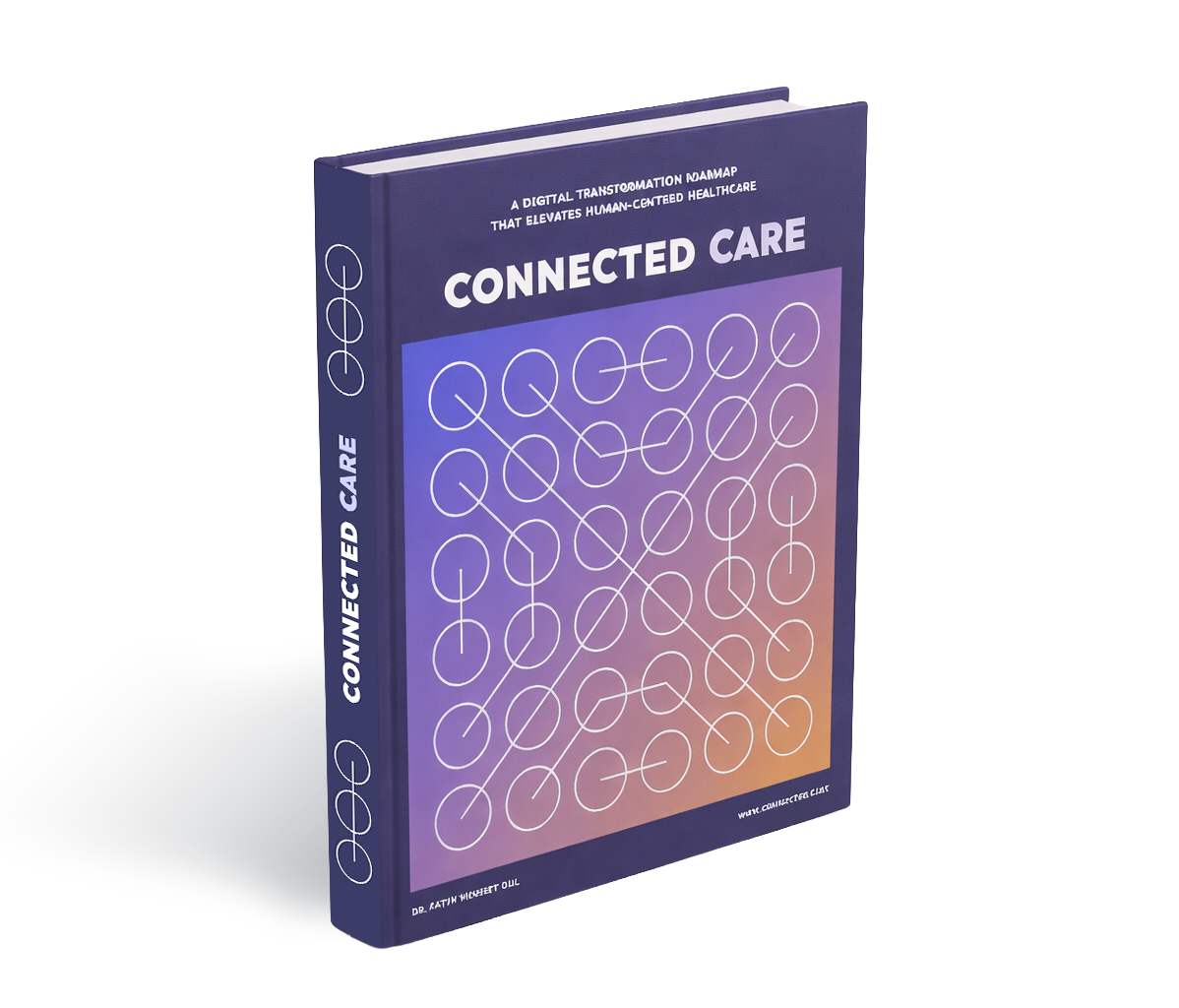
Enjoyed this article? There is more in Connected Care.
Many of the ideas here began in my book on healthcare leadership and digital transformation.
Dr Fatih Mehmet Gul is a physician and healthcare executive who has built, commissioned and led hospitals across the Gulf and Türkiye. He is an Honorary Professor at UCL Global Business School for Health, author of Connected Care, and host of The Chief Healthcare Officer podcast.
More insights →